Baldoyle Bay Seagrass Restoration Project
What's it all about?
Seagrass is brilliant! It is nature’s way of tackling climate change because it captures carbon and stores it, filters water, regulates water temperature, encourages biodiversity and is the scaffolding holding up Dublin Bay, protecting it from erosion.
In 2023 the Baldoyle Bay Seagrass Restoration Project was conceived by local sea swimmers Eveann Nolan and Rachael Lee from Ocean Breakers, to try to improve the water quality by reviving and recovering Baldoyle Bay’s threatened seagrass meadow that once flourished there 150 years ago. They set up the initiative using sponsorship money from one of their record breaking sea swims and it has evolved into a scientific collaboration between Ocean Breakers, University of Galway, National Parks and Wildlife, EPA, BlueC, RESET and LAWPRO. Our project has also been officially listed on the prestigious European Seagrass Restoration Alliance website https://esra-europe.eu/baldoyle-bay/
Baldoyle Bay is a site of international importance with EU protections and UNESCO status. The aims of the project are to use new and innovative scientific methods to grow the seagrass back again and to measure the carbon it absorbs and stores. A large sewage overflow tank is flowing into the Bay which we suspect is having a negative effect on the seagrass. This is also being investigated as part of the project.
Project Location: Baldoyle Bay Dublin (long. 53.4023, lat. 6.11174) Special Area of Conservation (NPWS SAC site 000199) Special Protection Area (NPWS SPA site 004016)
1. Collect seagrass seeds.
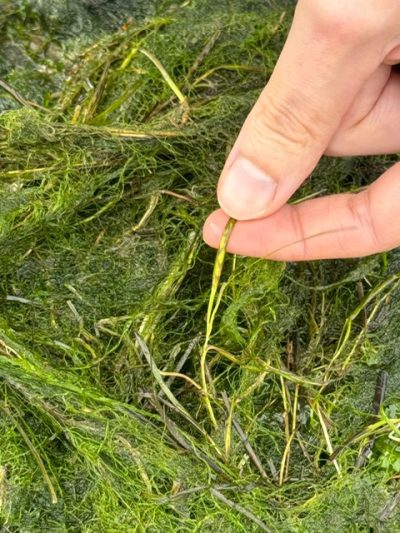
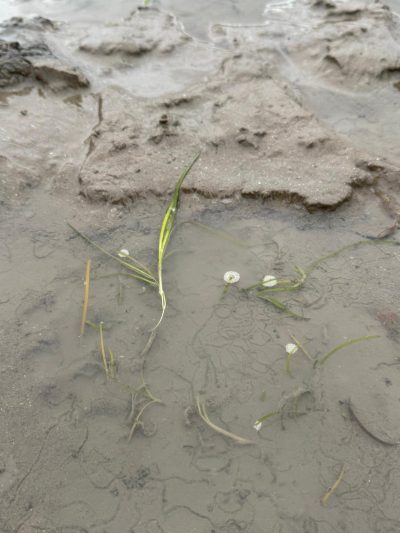
Seagrass seeds have been collected from some of the (very scarce!) plants that are already there. Seagrasses are flowering plants, which means that seeds can only be collected at certain times of the year.
2. Propagate the seeds back in the lab.
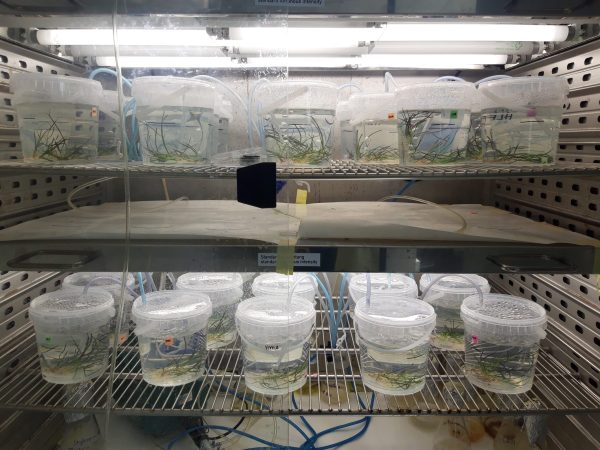
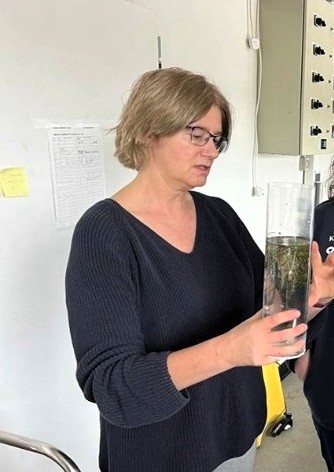
Collected seeds are stored and transported back to Galway University Labs under stringent conditions. There, new and innovative propagation experiments are carried out in carefully controlled environments that simulate the different conditions of Baldoyle Bay (water temperature, light, substratum etc.).
3. Transplant the propagated seedlings back into the Bay.
Once the seedlings are germinated, they are transplanted back into the Bay at the same location their seeds were harvested. The seedlings are first inserted into cutting edge anchoring mats of different designs - different designs are yielding different results.
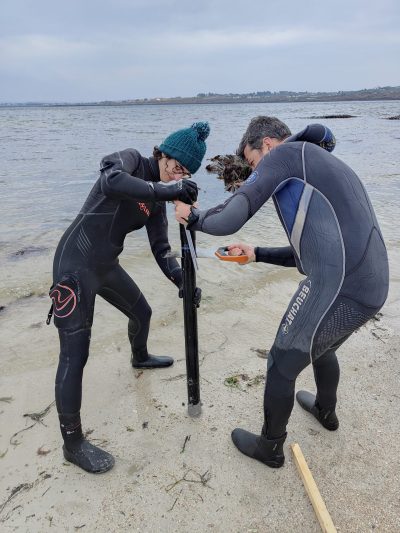
4. Monitoring and Data Collection.
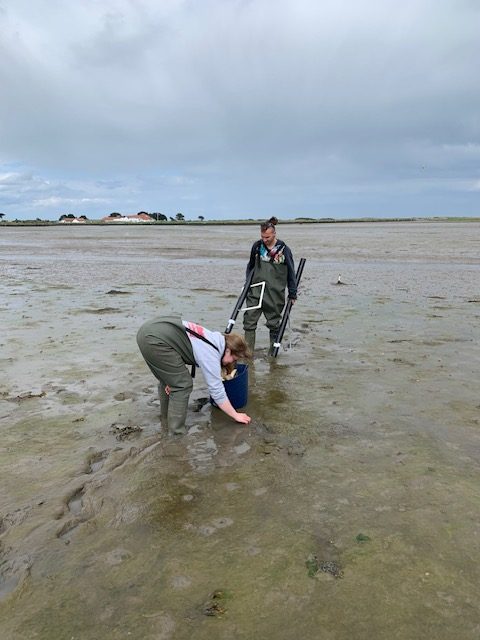
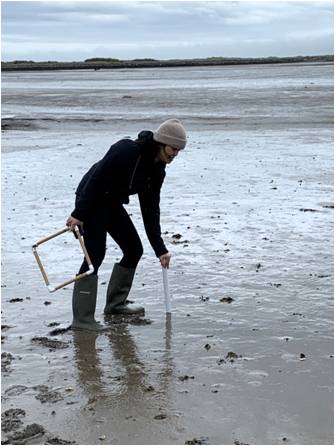
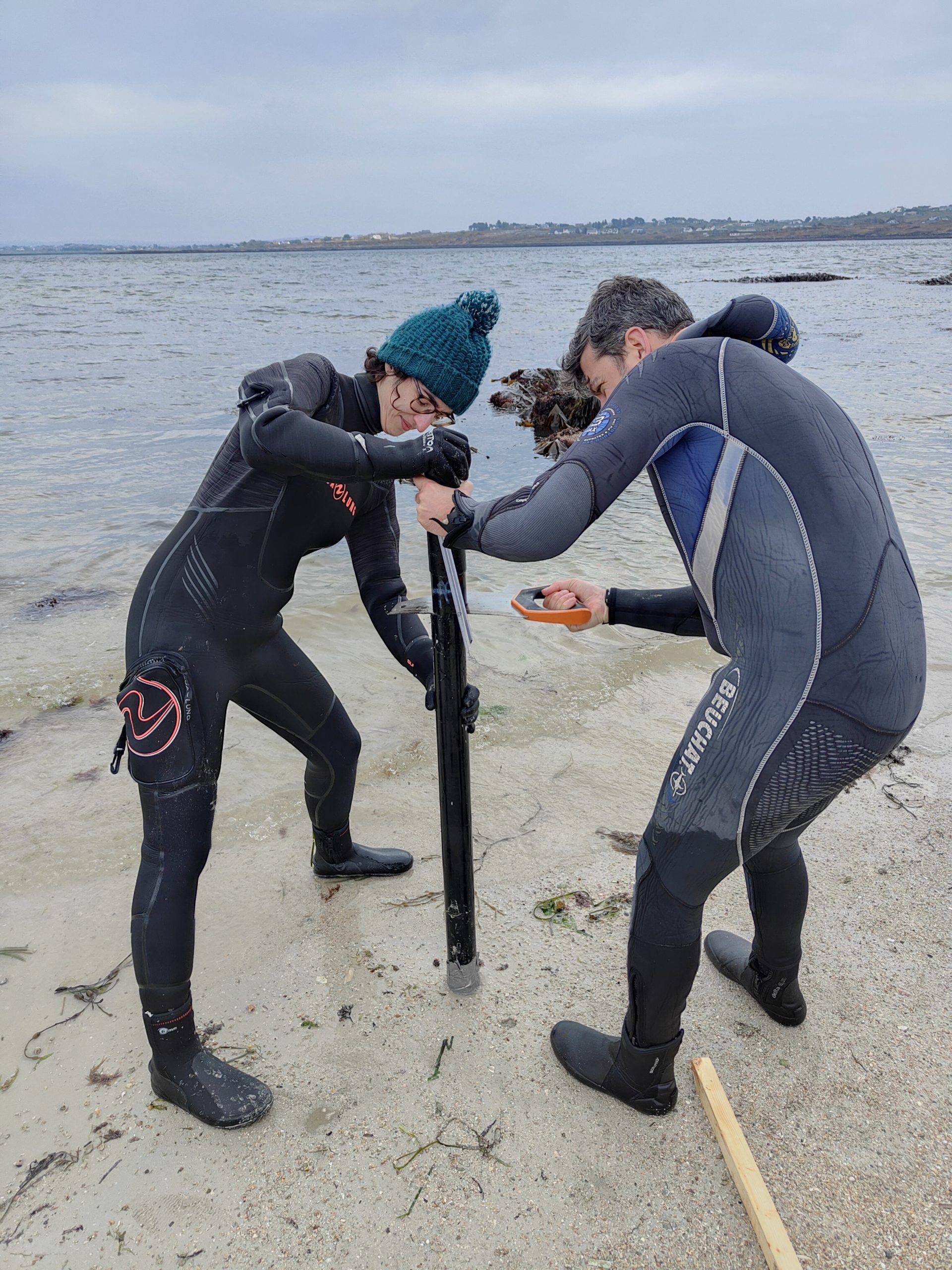
The transplants are being monitored for survival and growth data, including data evaluation of leaf photosynthetic activity (carbon-oxygen exchange) and sediment carbon. Initial results are looking very positive and we will publish them at the end of this year.
5. Water Testing
Comparative water sampling and testing is taking place to see what effect the water quality is having on the seageass locations. We will publish these results at the end of the year.
People and Funding
Project Coordinator: Eveann Nolan, Ocean Breakers (www.oceanbreakers.ie), Seagrass Restoration Ireland CLG, Director.
Project Scientific Lead & Data Validation: Professor Dagmar Stengel, University of Galway.
Project Fieldwork & Research Lead: Olivia Philo, Marine Biologist, University of Galway.
Project Fieldwork & Research Team: Dr Claudia Cara Ortega, Marine Biologist, University of Galway. Saige Alloway, Marine Biologist, University of Galway, Dr. Marc Julià Miralles, Marine Biologist, University of Galway, Dr. Tomás Azcárate-García, Marine Biologist, University of Galway.
Project License: National Parks & Wildlife.
Project Feasibility Study & Report: Betty Villamayor, Marine Biologist, University of Galway.
BlueC (www.BlueC.ie): In collaboration with Galway University, Baldoyle Bay’s Z. noltii seagrass meadow was selected as a national BlueC Workpackage 3 seagrass restoration reference site; ‘Investigating Ireland’s Blue Carbon Potential through a Scientific, Socio-economic and Legislative Approach’. Resources allocated are scientists and equipment.
RESET: In collaboration with RESET Project; ‘Enhancing Blue Carbon and Ecological Services through Nature-Based Solutions: Integrated Restoration in Irish Coastal Waters’. Resources allocated are scientists and equipment.
LAWPRO: In May 2026, the project was awarded funding by LAWPRO, the Local Authorities Water Programme, to carry out a sea sampling water quality comparison study at the seagrass transplant locations - Baldoyle, Portmarnock and Malahide. Resources allocated are scientists and equipment.
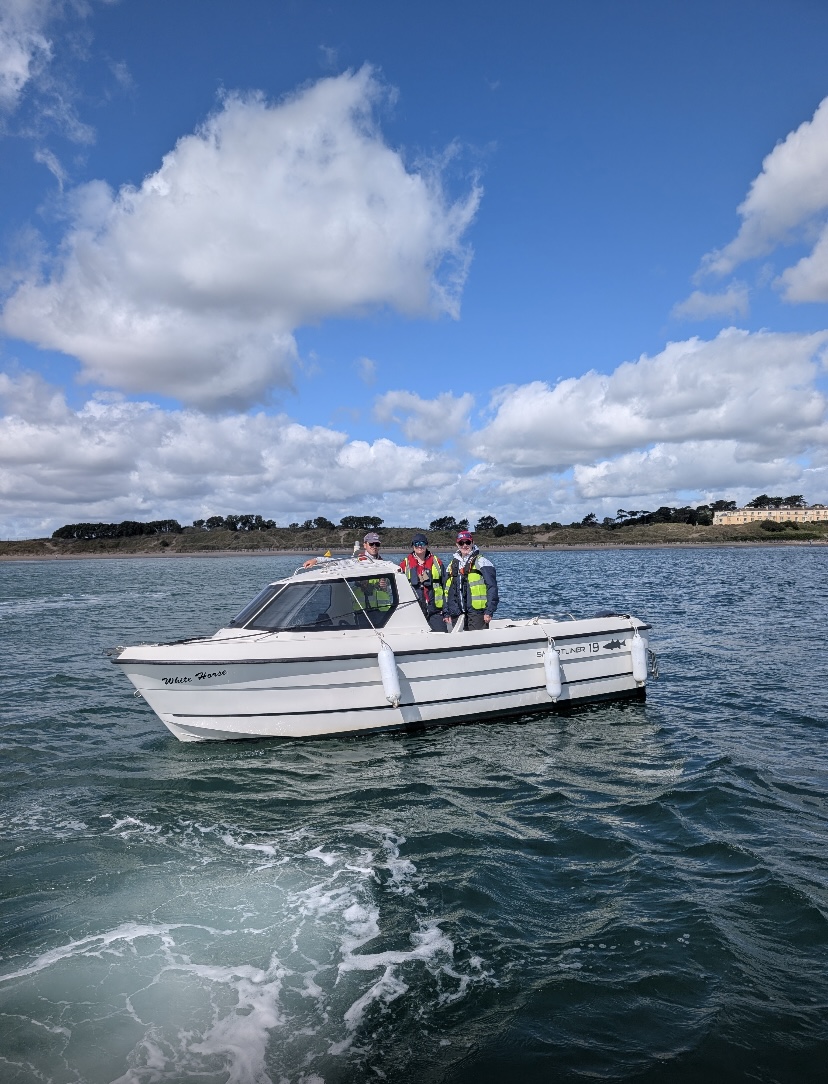
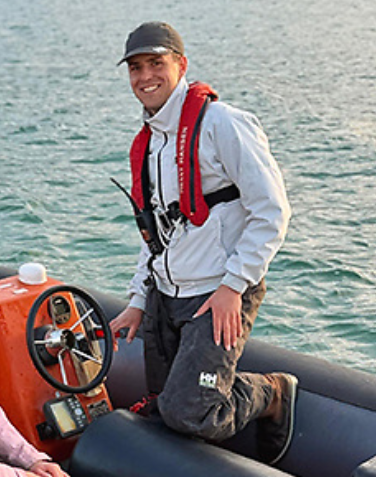
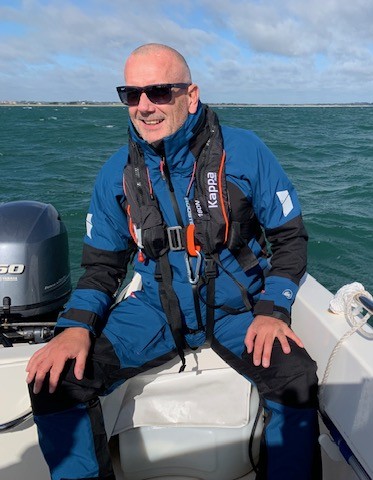
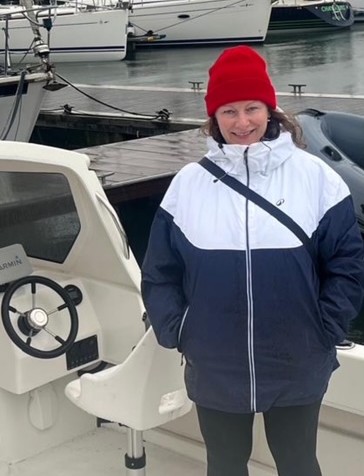
Marinership: Evan Banable, Howth Yacht Club and Tom Healy, Ocean Breakers.
Laboratory Analytic Testing (Seawater): EUROFINS Scientific.
Project LOGO and Branding: Suzanne Barry Design (copyright).
Website: Eveann Nolan, Seagrass Restoration Ireland CLG, Director.
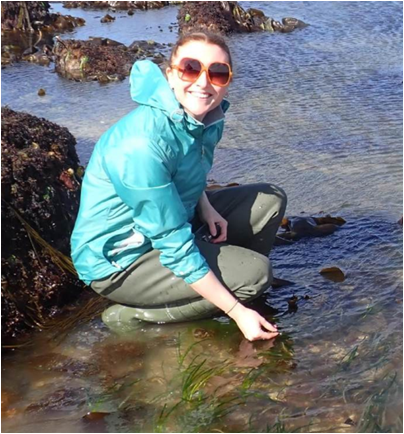
Seagrass Scientists and Marinership
Olivia, Saige, Tomas, Betty, Claudia, Pedro, Dagmar and
Evan, Tom, Eveann
Copyright © 2026 Seagrass Restoration Ireland CLG